
Student collaboration with workshop in women's health
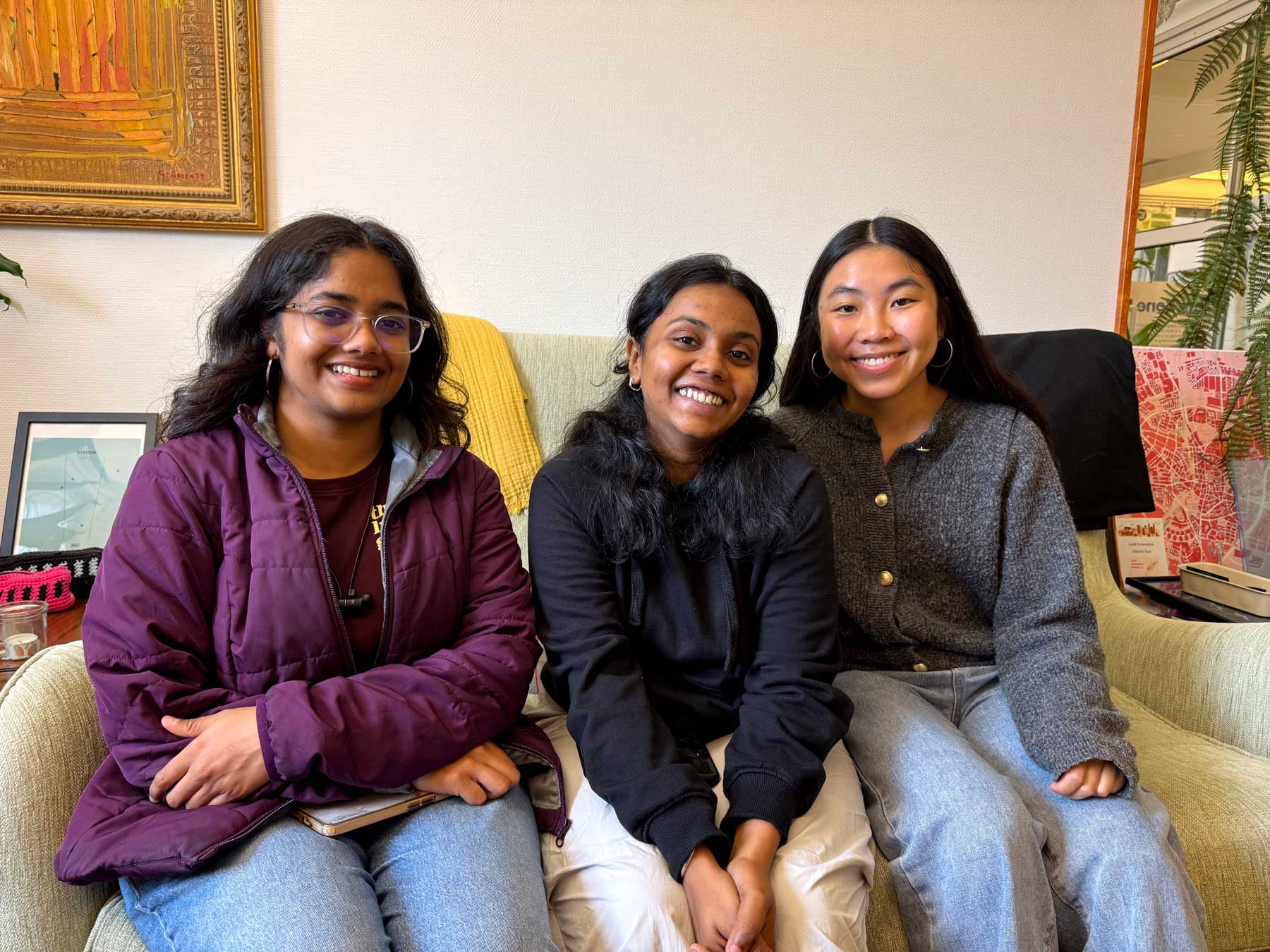
Kaitlyn Tien, Hamsini Bharat and Meenakshi Harikumar have just started the second year of their master's studies in biotechnology in Lund University. Since January, they have also been working on a project that will compete in iGEM (International Genetically Engineered Machine), an international annual competition in synthetic biology with 450+ teams, 50+ countries, and 5000+ students. Each team works on a different solution to a real-world problem, spanning various categories.
“By the time the competition in Paris arrives, we will have almost a year of design, planning, implementation, and work on the project behind us,” says Hamsini Bharat. "We chose early on to focus on an idea related to women's health. Our project 'AnTigone' addresses a condition called PMOS (Polyendocrine Metabolic Ovary Syndrome), formerly known as PCOS.
PMOS is one of the most common hormonal and metabolic disorders in women of reproductive age and affects an estimated 10-13 percent of all women. The condition is driven by several clinical factors, one of the main ones being hyperandrogenism (HA) which is elevated levels of androgens (male sex hormones) and can cause symptoms such as sparse ovulations, difficulty getting pregnant, increased hair on the body (hirsutism) or acne and oily skin, but also psychological effects such as depression or fatigue.
The AnTigone project aims to create an understanding of the fact that there is a gender-related inequality in medical research, diagnoses and treatment between men and women. Many women who actually have PMOS are underdiagnosed or incorrectly diagnosed. The project has also sought to create a solution to the basic problem instead of focusing on the symptoms.
"The treatments that are available now are mainly symptom-based," says Meenakshi Harikuman. "We are constructing a bacterium to release enzymes so that the excess levels of male sex hormones are converted into a less bioactive form.
During the summer, the AnTigone project participated in an iGEM-related conference in Málaga, Spain, where they won the best overall project award for their work. The feedback from the jury also provided valuable thoughts, which among other things led to new ideas about different biosecurity strategies.
The team AnTigone includes 14 master's students with degrees in biotechnology, pharmaceutical technology, bioinformatics and virtual reality. Why is it good to mix skills?
"We need different ideas to be able to reach our goal. It gave me the space to understand and learn more and to see how the team could work together and how the whole project was connected," says Hamsini Bharat.
"It has made me aware of how important it is to network and the wide range of different skills that are required for a project to work," Meenakshi Harikuman continues.
"Personally, I have learned a lot of new skills from different people because we have people from different backgrounds," Kaitlyn Tien points out. Being part of the education committee helped me with scientific communication to people who may not have a scientific background.
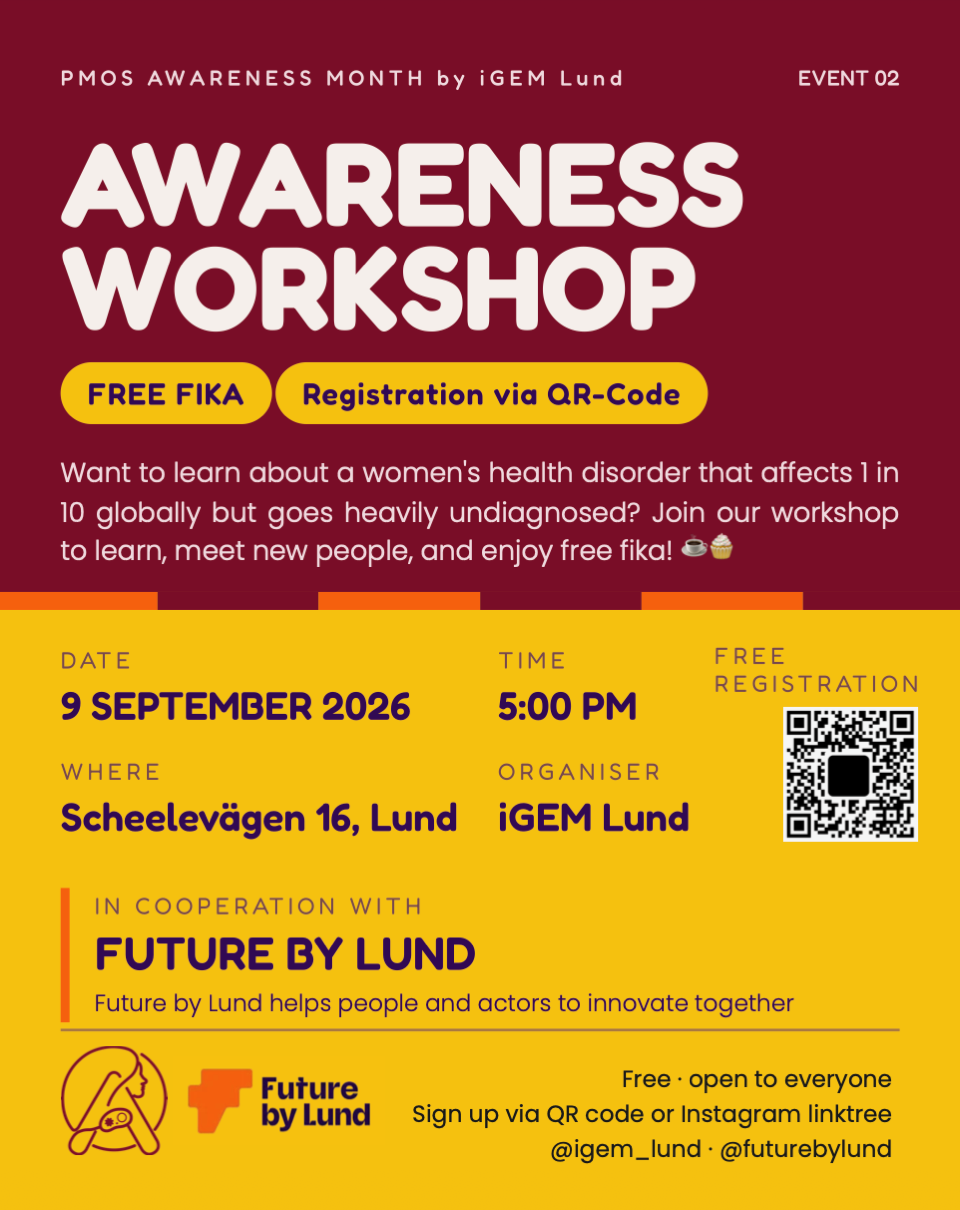
On September 9th, AnTigone will host an event with Future by Lund, which they call a “Awareness workshop”. During this workshop, the challenge with PSOM and the project's solution to the syndrome will be presented. Part of this is done by the participants themselves receiving information about tests on anonymized case files, which will provide a background on lifestyle, hormone levels and other tests factors so that the participants can try to determine for themselves whether they are dealing with PMOS or another condition, allowing them to experience the complex, multifactorial nature of the disorder.
Students from different backgrounds are welcome to register for the workshop before 9 th September. Interested students from different backgrounds are also welcome to apply to join the 2027 iGEM team. This can be a great opportunity to work hands-on with a real-world problem, build teamwork skills, and collaborate with people from a wide range of fields. (image)
Contact: information@igemlund.org and @igem_lund
Here you will find an article about Future by Lund Student Network's previous workshop on AI and design. www.futurebylund.se/nyheter/ai-och-design-blev-forsta-amnet