Communication is their mission
Max and Faruk Tairi came to Sweden from what was then Yugoslavia in 1983. They wanted to build a new future in a safer country. Max started a karate club in Malmö, became captain of the Swedish national style karate team, and quickly learned Swedish.
"We began our professional lives in Sweden as language interpreters," says Max Tairi. "Our work involved helping people understand each other despite language barriers. We interpreted between Albanian, Serbo-Croatian, Macedonian, and Swedish."
This work provided them with crucial insights.
"We saw how crucial communication is for participating in society. At the same time, we started to wonder how difficult it must be for people who can neither hear nor speak and who rely on sign language."
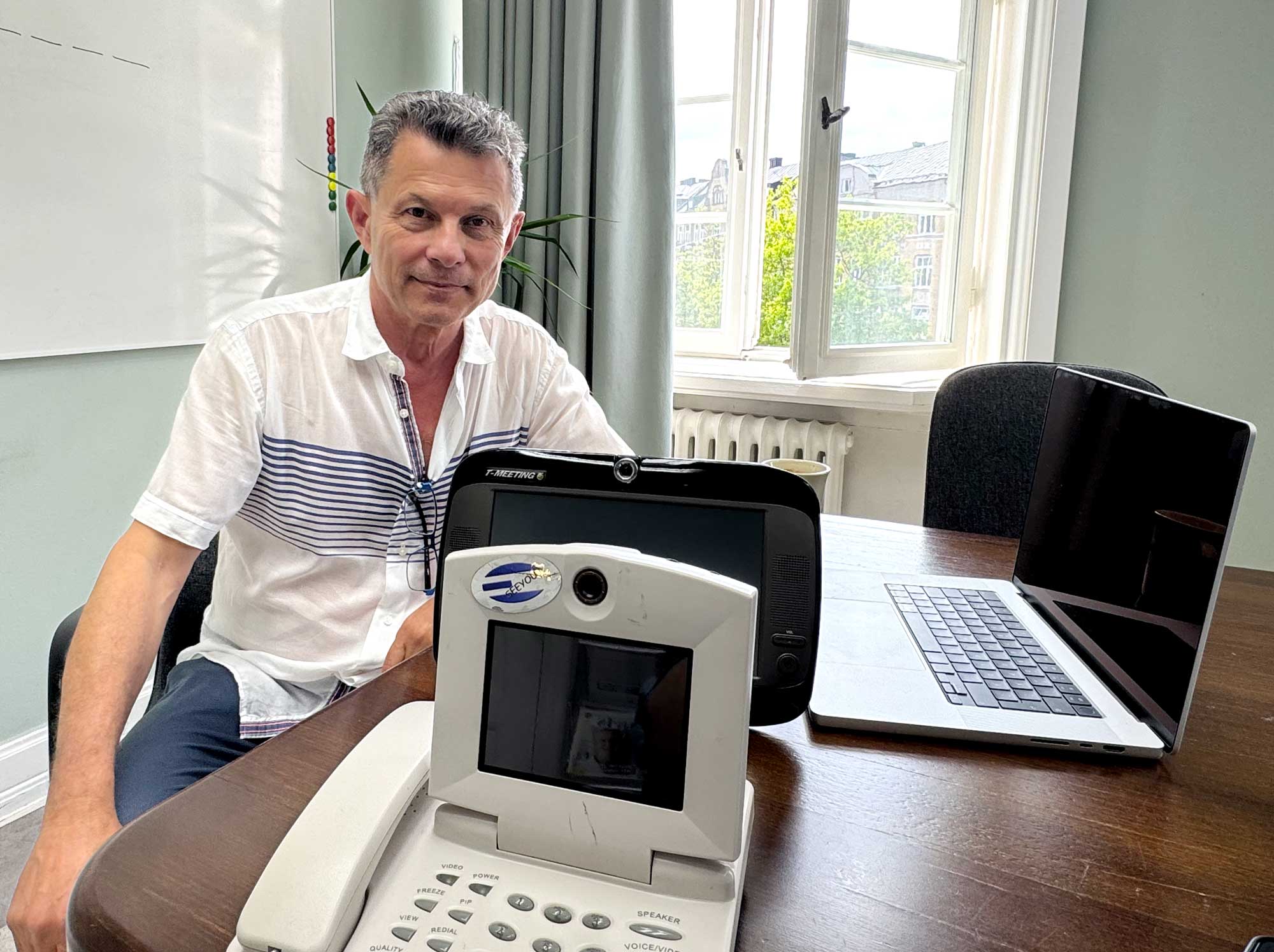
Through their interpreting profession, they came into early contact with video conferencing technology. At that time, advanced and very expensive systems were used by authorities and organizations.
"The technology was expensive and the image quality often limited, but we still saw the potential. We realized that video technology could be used to enable deaf people to communicate directly with each other."
The result was that T-Meeting launched video telephony for the deaf as early as the beginning of the 2000s – long before today's video calls became commonplace.
"We were early adopters, and through our solutions, many deaf users gained the ability to communicate in sign language via video when there were no affordable alternatives on the market yet."
TERA – communication without barriers
In late 2017, TERA was launched, a complete communication aid now used by individuals with hearing loss, deafness, or speech difficulties.
TERA combines telephony, video calls, real-time captioning, and AI-based speech synthesis in a single solution. Users can make and receive calls via standard phone numbers, while the other party uses their regular phone without needing to install any app or special equipment.
When someone speaks, TERA automatically converts speech to text in real time. If the user cannot speak themselves, the written text can instead be converted into natural speech through AI-based speech synthesis.
"TERA fills in the communication gaps that the user experiences. Those who cannot hear can read what is being said. Those who cannot speak can have their text converted into speech. This makes communication significantly more independent."
The solution works for both phone calls and in-person meetings and can be used on mobile phones and tablets.
One of the latest features is real-time translation between languages. Users can have what is being said translated directly during the call, with automatic language recognition and no need to change any settings.
TERA is currently a medical device and is prescribed in several regions. For the user, it means increased independence and better opportunities for work, studies, and contact with healthcare. At the same time, society can reduce the need for certain interpreting services and thus use resources more efficiently.
An ecosystem of accessible solutions
Over the years, T-Meeting has developed several complementary solutions.
TM is a platform for accessible video calls and sign language communication, combining HD video, real-time chat, and audio. The solution is used both privately and professionally and can also be used by deafblind individuals.
TM-Alert helps users become aware of incoming calls, alarms, and messages through strong vibrations and visual signals.
Through its Distanstolken (Remote Interpreter) service, the company offers solutions used by interpreting centers for remote sign language and speech-to-text interpreting.
Through its subsidiary EaseAccess24, the company also works with digital accessibility, helping organizations meet the requirements of the European Accessibility Act by identifying and rectifying accessibility issues on websites and in digital services.
The next step – a wearable camera for the blind
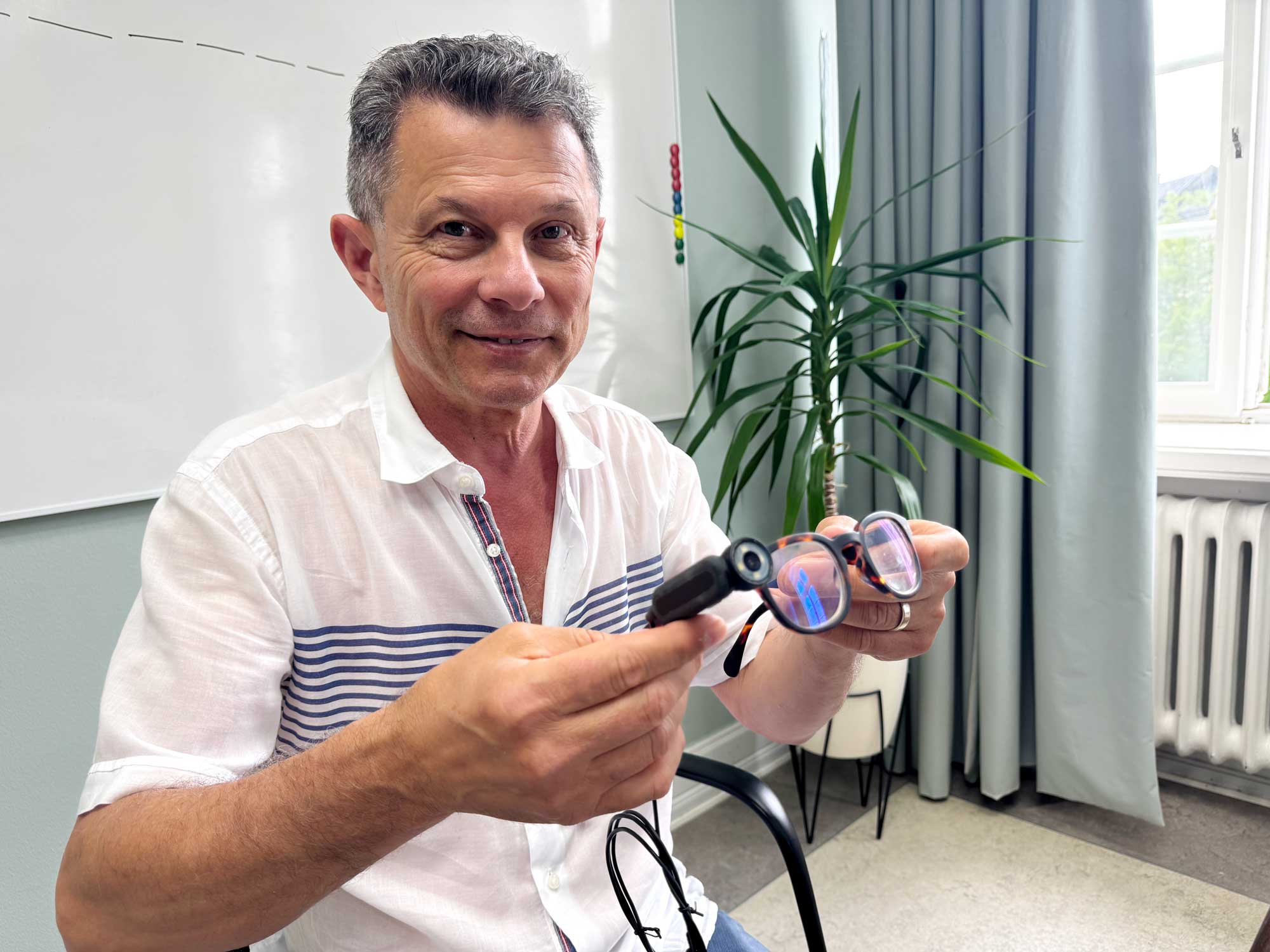
This autumn, T-Meeting plans to launch what might be its most ambitious product to date.
The wearable camera is mounted on the user and can read text, display the surroundings, and enable real-time remote sighted assistance.
– The idea is to establish a visual assistance center where visual assistants can help the user remotely based on what the camera shows.
The product has already been tested with blind users and organizations.
– We believe the solution can make a big difference in everyday life. Many visually impaired people currently have limited access to sighted assistance. With our solution, a visual assistant can help the user remotely, guide them to the right place, and provide support when needed.
The system also includes proprietary software adapted for collaboration between the user and the visual assistant. In the long term, this technology can be used in many other areas where experts need to be able to assist people remotely.
Innovation Driven by Real Needs
Despite all the technical solutions, Max and Faruk don't primarily describe themselves as tech people.
– We are essentially inventors and entrepreneurs. We are driven by solving problems people encounter in their daily lives. First, we immerse ourselves in the users' situation, and then we develop the solution together with our engineers and test users.
As new members of Future by Lund, they see great opportunities for collaboration.
– We've already had inspiring conversations with Katarina Scott. When people from different fields meet, new ideas emerge. Our wearable camera, for example, could be used by experts who need to provide remote assistance in entirely different areas than visual support.
Future by Lund also sees great potential in the collaboration.
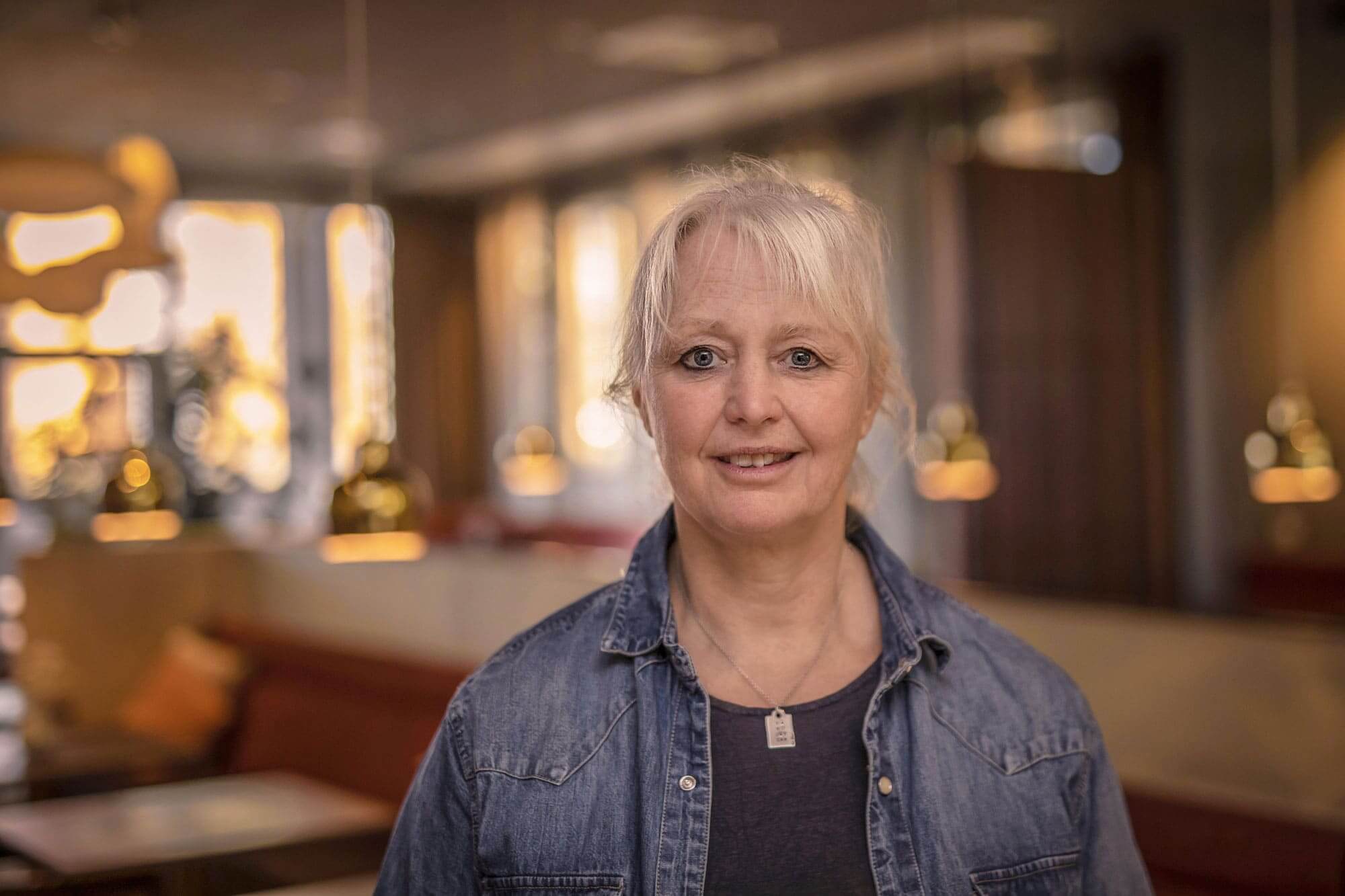
– Now we can take the work with digital inclusion to the next level. If we build innovation with accessibility as a starting point, we create solutions that work better for everyone, says Katarina Scott at Future by Lund.
For Max and Faruk, everything ultimately comes down to the same thing as when they started as interpreters over four decades ago:
– Everyone has a mission in life. Our mission has always been to help people understand each other. First through language, and for the past 25 years, through technology.