Test of three-dimensional sound brings Kalaudisoscope portfolio forward
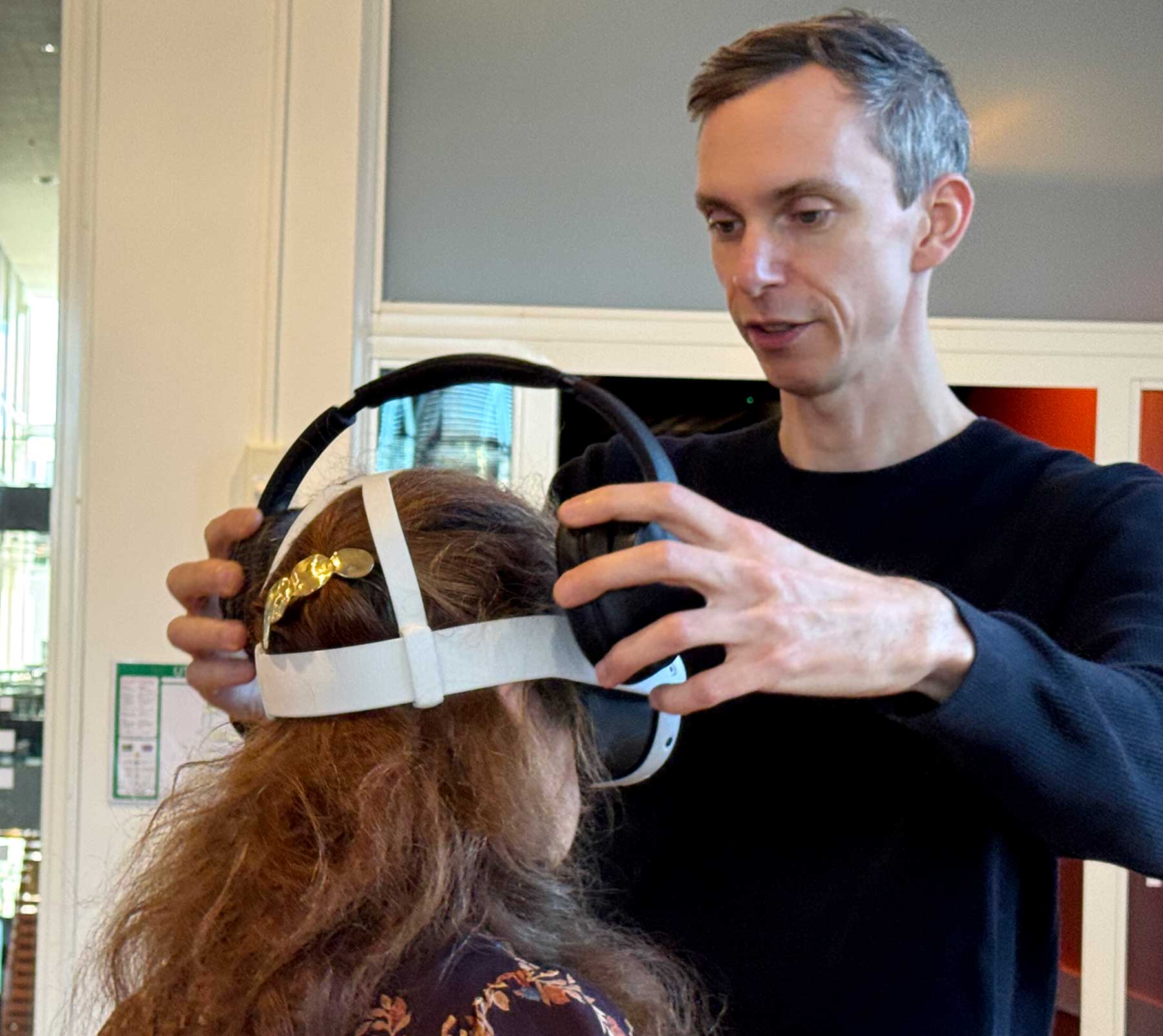
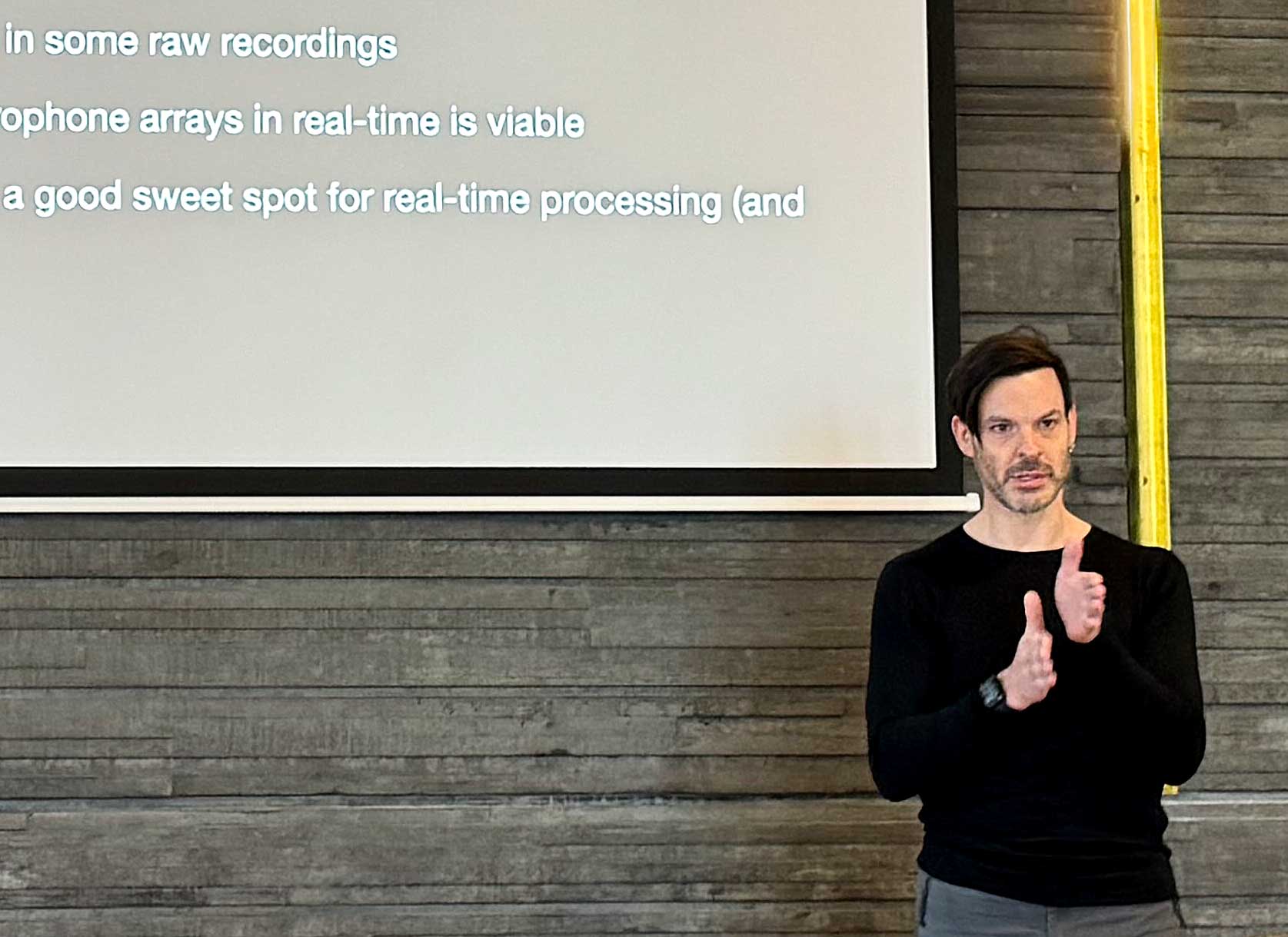
Within Kalaudioscope portfolio the actors focus on jointly developing knowledge for new solutions about immersive experiences in sound and video with the vision to develop opportunities for the audience to experience the magic of live concerts digitally. Sound is central to the sense of presence. The players are experts from different fields and the portfolio works with many parts - of course audio and video but also AI, cloud solutions, legal aspects and user experience. Over the past two years, several sound tests have been performed at Malmö Live and Malmo Opera with different recording techniques. On 31 October 2025, an audio and video test of how to create an ambisonic (three-dimensional) sound field was made through a recording at Malmö Opera by experts Sebastian Hastrup and Tim Bishop. The result was shown under the portfolio's arrangement known as “Takes”, and this was the sixth in the order.

Ambisonic means an audio format that captures a complete three-dimensional sound field (360 degrees) instead of just creating a two-dimensional circle. Sound is reproduced correctly regardless of the direction it comes from, including from above and below. The technology is used in virtual reality (VR) and 3D environments, and Kalaudioscope builds on this knowledge.
"Increased interest in VR (Virtual Reality), immersive storytelling and a shift in consumer listening habits to more headphone listening have led to the widespread adoption of spatial audio formats such as Dolby Atmos and Sony's 360 Reality Audio over the past ten years", says Tim Bishop. "Combined with more powerful computers and growing research into spatial audio, this means that we now have the tools to conduct ambisonic recordings at higher spatial resolution and at a lower price than was possible just a few years ago."
During the recording test at Malmö Opera, both sound and image were recorded, but this time it was the sound that was in focus. To do this, mainly five microphone positions were used in the salon - one at the conductor, two at the side entrances of the venue, one at the main entrance and one at the balcony. Microphone positions could consist of many microphones and channels - such as the one at the conductor, where a larger number of microphones allowed more focus on single instruments. A total of 119 individual microphone capsules and audio channels were used in the venue. The microphones used were of different technologies and different price levels. In addition, it used four cameras and simulated a live stream, which was then recorded in the studio. The tests were successful, and you can read about how it went in detail in the yellow box below.

When Kalaudioscope players are to move forward, Hastrup and Bishop recommend, for example, thinking about which audience you are targeting, what kind of engagement you want to give the opportunity to and in what ways you can experience the broadcasts. In addition to more sound tests, it is also necessary to investigate which broadcast/streaming solutions can handle spatial and interactive sound.
"As with the emergence and spread of all technologies, the biggest challenge in implementing spatial audio for digital live streaming is standards and interoperability", continues Tim Bishop. "There are currently no standard solutions for how to stream spatial audio. Through both this test and a previous one at Malmö Live, we have shown that the technology is capable and well suited to capture the concert experience; the biggest question now is how to deliver the same perceptual quality to a remote audience that can interact and curate their own experience from multiple audio and video feeds."
“We are in an exciting development now,” says Birgitta Persson, project manager at Future by Lund and in the Kalaudioscope team. The live streaming market is expected to grow by 32% by 2032.
How could a company make use of the knowledge created and used in this field?
"I believe that the benefit that companies can get from working together in an innovation portfolio is to gain a broader understanding of existing practical solutions and in this case combine that with experiences from the arts sector where research into spatial sound has been going on for many decades, but often remains marginalized and unseen/unheard, " says Tim Bishop.
As a researcher, entrepreneur, artist or company, do you want to get involved in the Kalaudisocope portfolio?
Contact Birgitta Persson 076-856 46 22
Do you want to get involved in another portfolio?
Contact Charlotte Lorentz Hjorth 046-222 41 19