
Cross-border test unites three IoT platforms
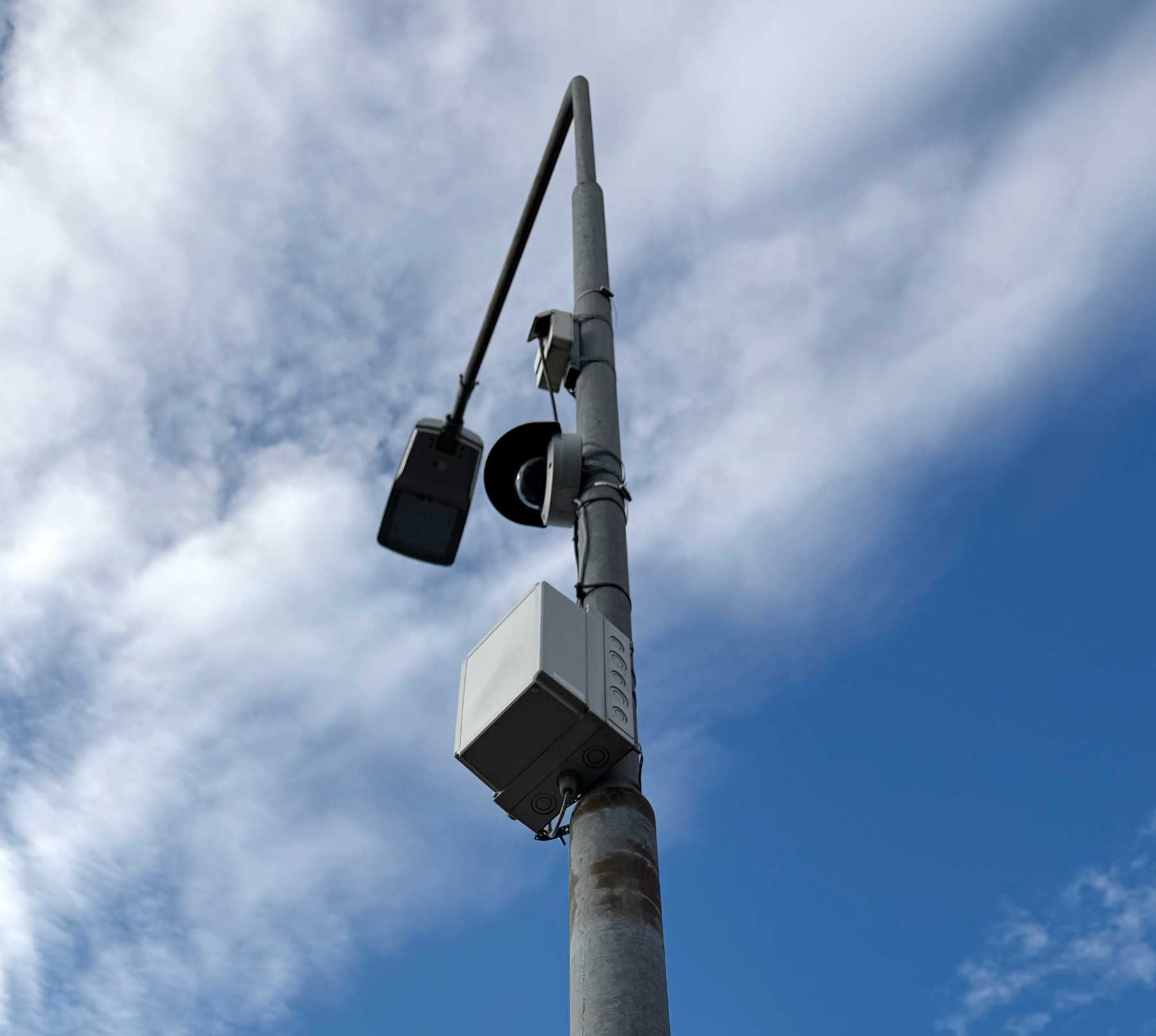
For some years now, Veberöd has been trying out how the small village can be a model for digitising a society through smart technology and IoT, including in several of Future by Lund's projects. For some time now Veberöd has also been a testing ground for the national initiative Living Labs Smart Communities where the company Smart Villages assists with the possibility of testing how smart technology can be used in a village. Through transparency and documentation, solutions are created that municipalities, neighborhoods and villages can easily take part in and build on.
Why is it so important to be able to use sensors? This is mainly because sensors can be used to collect, share and ensure that data can be used in real time, and this can lead to municipalities and regions making both faster and more informed decisions. Digitalisation and smart connected solutions can accelerate society's necessary sustainable transition. However, sensor technology has not been used to a sufficient extent in the past, and one reason may be that the solutions have not been shared between municipalities. Many initiatives get stuck in the pilot phase and never scale up while other solutions may be too complicated and expensive for individual municipalities to cope with. And it is hardly economical or sustainable if each municipality has to test its own solutions.
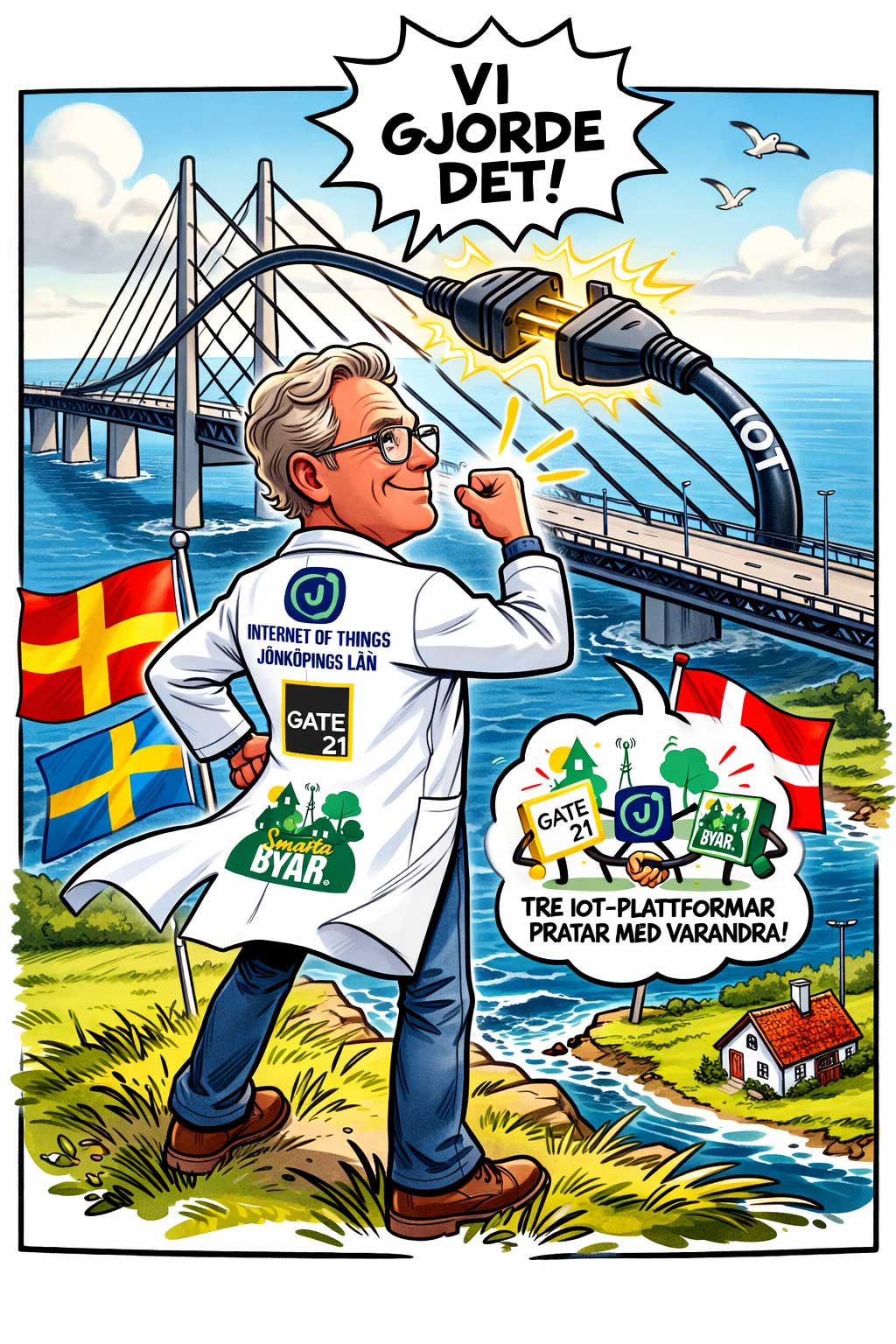
In the cooperation there are many actors and they use partially different platforms. This could become an obstacle to cooperation, and therefore it is an important step that three platforms have now been linked together in the SmartFlow platform. It is Sensativas IoT platform Yggio, which is the platform used in Lund, OS2IoT used by several municipalities in Denmark and Jönköping's IoT Open platform.
"I think it is important that we do not lock ourselves to a supplier of sensors and platforms", says Jan Malmgren at Smarta Byar. "By being able to read data from the different platforms, we are free to use what suits best on a case-by-case basis."
Why is it important to open the systems?
"Because municipalities today sit on valuable data, but it is often locked up in different systems. If we can read and compare data regardless of platform, we create true interoperability. This allows municipalities to share experiences, compare effects and build on each other's solutions instead of starting from scratch,” continues Jan Malmgren.
Can everyone see each other's data now?
"No. All data owners decide for themselves what is shared and with whom. In Veberöd we have technically demonstrated that it is possible to read data between the platforms, but sharing only takes place where there are agreements. It's about creating opportunity -- not coercion. The test environment itself is located in Veberöd, but the solution is built so that it can be replicated nationally. That is precisely the point, to show a model that others can use. It is not the goal that all data should be open. The goal is to make it technically possible to share data when you want and need it in a secure and structured way."
Project participants test and document how the integration is done through a validation process, which is developed together with municipalities to create a replicable solution. The solution is not just an inspiration example, but means actually working out how to do it, describing step by step what sensors you have tested, giving a list of all the components and how they are assembled and more. This allows municipalities to follow a clear approach instead of inventing their own solutions.
Region Jönköping and Jonkoping Municipality plays an important role in the project and helps with the interconnection.
"This is bigger than three IoT platforms talking to each other, because we have shown that an IoT application can work regardless of which platform a municipality uses", says Simon Hillfors at Jönköping Municipality. "In addition, the cross-strait connection goes to Denmark, which is an important step. By connecting Yggio, IoT Open and OS2IoT, we can benchmark technology and set and more clearly distinguish between what is IoT-specific knowledge and what can actually be plug and play. This saves time for municipalities and reduces the risk of lockdowns. The goal is a national structure where solutions can be shared and replicated without anyone having to change platform."
The base of the national project Living Labs Smart Communities will be in Veberöd, but the goal is to show a way forward for the whole country. Project partners are Smart Villages, Future by Lund, Collage Communication, Lund Municipality, Region Jönköping, Jonkoping Municipality as well as Nässjö Municipality. The initiative is funded through Region Skåne and the strategic innovation programme IoT Sweden (Vinnova, Energimynverket and Formas).
